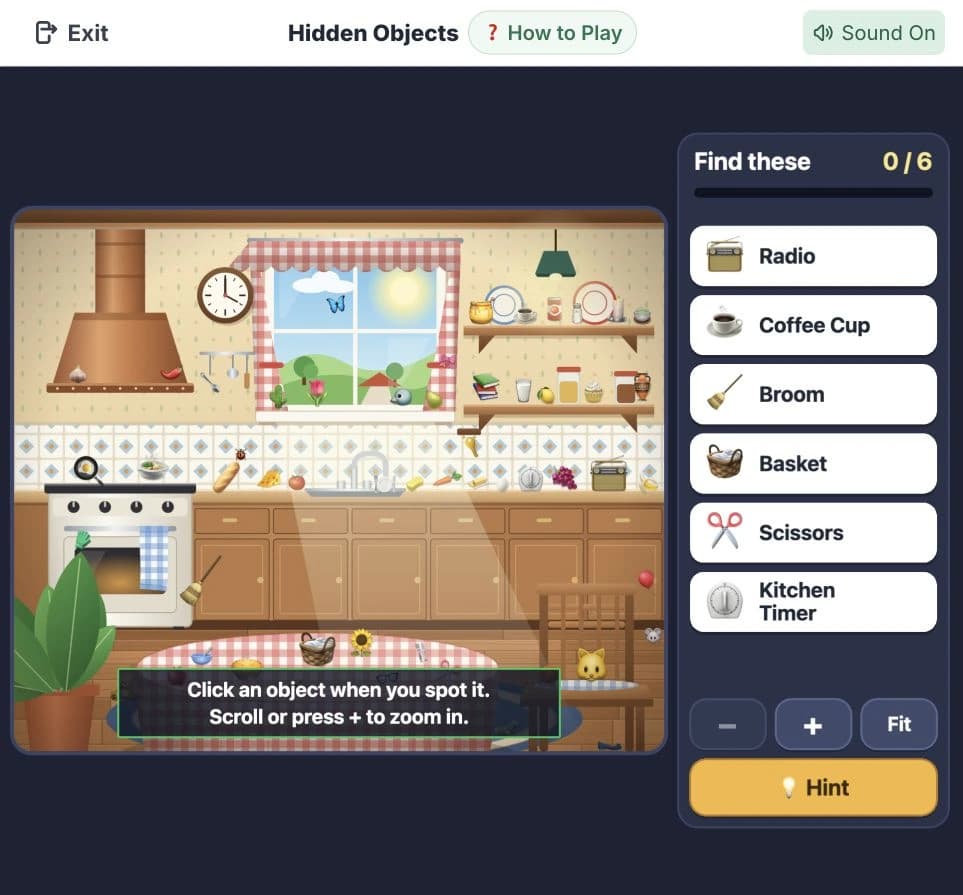
Hidden object games for seniors can turn a quiet visit into a shared search, a few laughs, and an easy reason to talk. The best setup is simple: choose one clear scene, sit side by side, name one object at a time, and stop before the activity feels tiring.
This guide gives caregivers and families a calm 20 minute plan for using hidden object games during a visit. It is built around BrainFunHub's no timer Hidden Objects game, which asks players to search a cozy picture and find every hidden object without rush.
Quick Answer
For most visits, open one hidden object scene on a tablet, laptop, or larger screen. Ask the senior to choose the first item from the list. Look together, celebrate each find, and let conversation grow from the picture.
The goal is not to finish the whole scene. The goal is a pleasant shared moment that fits the person's vision, energy, attention, and mood that day.
Why Hidden Object Games Can Fit Senior Visits
A hidden object game gives both people a shared focus. That can make conversation easier than sitting face to face and trying to think of what to say next.
The National Institute on Aging notes that older adults can face higher risk of loneliness and social isolation as health, vision, memory, mobility, and social ties change. A short shared activity is not a cure for loneliness, but it can help a visit feel warmer and more connected.
Hidden object play also works well because it can be adjusted in the moment. You can search together, take turns, give gentle clues, or simply talk about what you see in the picture.
Check Comfort Before You Start
Hidden object games depend on seeing details, so comfort matters. The National Eye Institute explains that low vision can make everyday tasks like reading and seeing a computer screen harder, and it suggests brighter light, magnification, and larger display settings when helpful.
Use this quick setup check before you begin.
| Setting | What to Try | Why It Helps |
|---|---|---|
| Light | Turn on a lamp or sit near gentle daylight | Small picture details are easier to see |
| Screen | Use a tablet, laptop, or TV when possible | A larger scene is easier to search together |
| Glare | Tilt the screen away from bright windows | Less glare can reduce eye strain |
| Seat | Sit side by side instead of across the room | Both people can point and talk naturally |
| Pace | Start with one object at a time | Fewer choices can feel calmer |
A 20 Minute Hidden Object Visit Plan
Use this plan as a starting point. Shorten it to 5 minutes on a low energy day, or repeat a favorite scene when the senior enjoys it.
| Time | What to Do | Helper Cue |
|---|---|---|
| 0 to 3 minutes | Open the game and settle in | "Let's look at this picture together." |
| 3 to 6 minutes | Let the senior choose the first object | "Which item should we find first?" |
| 6 to 12 minutes | Search slowly and talk about the scene | "I see a shelf. What do you notice?" |
| 12 to 16 minutes | Offer one gentle clue if needed | "Maybe we can check the corners." |
| 16 to 20 minutes | Stop, even if the scene is not finished | "That was a good round. Want to save the rest?" |
If the senior wants to keep going, that is fine. If attention fades, close the game while the mood still feels good.
Helper Words That Keep It Encouraging
The best helper language is calm and specific. Try phrases like these:
- "Can you help me find the cup?"
- "I am going to look on the left side. Would you like the right side?"
- "That was a good catch. I did not see it at first."
- "Let's look near the bright blue chair."
- "We can stop here. This was enough for today."
Avoid turning the game into a test. Questions like "Do you remember where it was?" may feel stressful for some people. A softer option is, "Let's look together again."
How to Adjust the Difficulty
Some seniors enjoy a challenge. Others need a smaller, calmer task. Adjust the activity before frustration builds.
For vision strain, make the screen larger, move closer, improve light, or switch to a large print paper activity.
For memory changes, repeat the object name kindly, point to the object list, and use simple clues. The Alzheimer's Association recommends matching activities to current abilities, focusing on enjoyment, and changing the activity when attention fades or frustration rises.
For low energy, find only three objects, then stop. A small success is still a success.
For group visits, assign friendly roles. One person reads the list, one person searches the top of the picture, and one person searches the bottom. Keep the mood light, and avoid correcting every guess.
Add a Paper Backup
Sometimes a screen is not the right fit. If internet access is spotty, eyes feel tired, or the senior prefers paper, bring a simple printable activity instead.
The Caregiver's Daily Activity Rescue Kit is a printable option with daily activities, caregiver cues, short 5 minute choices, and answer keys. For more broad shared ideas, the BrainFunHub guide to activities for caregivers and seniors can help you choose another calm option.
When to Choose a Different Activity
Choose something else if the senior is squinting, rubbing eyes, turning away, getting quiet, or saying the picture is too busy. Those signs do not mean the visit failed. They only mean the activity needs to change.
A simpler puzzle, familiar trivia question, music prompt, or conversation card may fit better that day. BrainFunHub's simple puzzles for seniors guide can help you choose a lower effort option.
Practical Takeaways
A hidden object game works best when it feels like teamwork.
- Use a larger screen when possible.
- Search for one object at a time.
- Give clues instead of corrections.
- Stop while the activity still feels pleasant.
- Keep a printable backup nearby.
A good visit does not have to be long or perfect. A few shared minutes, one found object, and a kind closing can be enough.